Research · publication
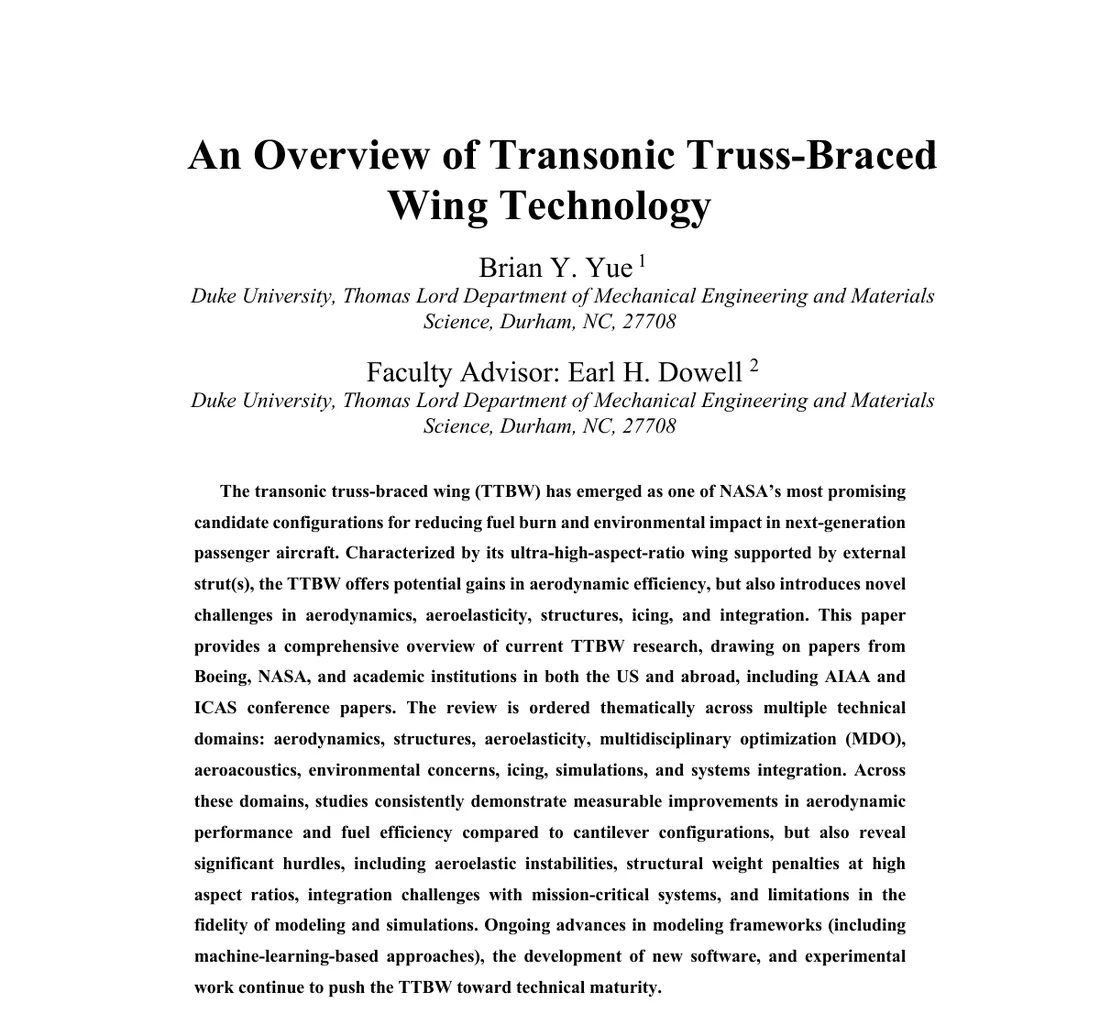
An Overview of Transonic Truss-Braced Wing Technology
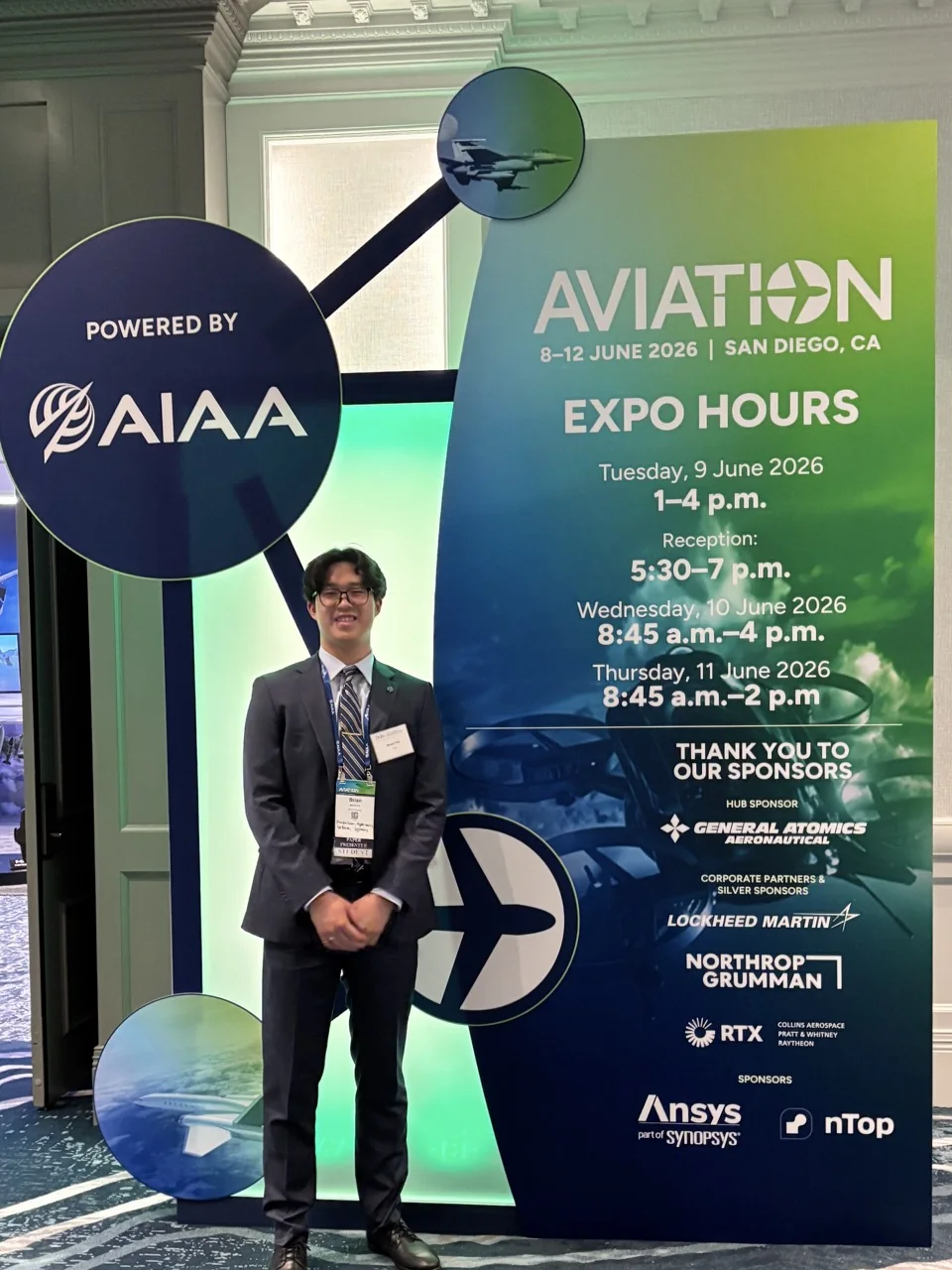
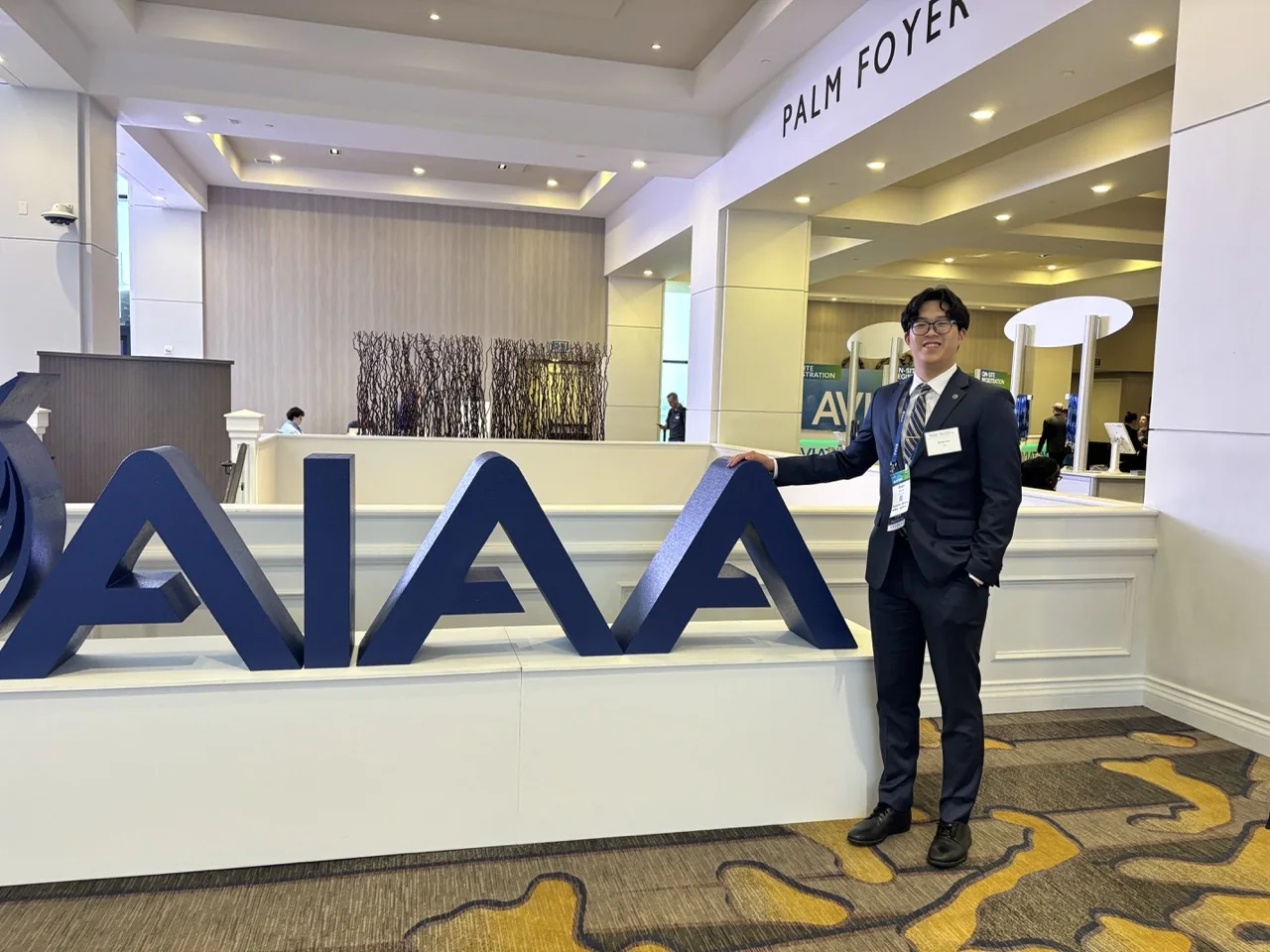
I wrote this AIAA paper on my own from 53 sources, then presented it at AVIATION 2026 with two of the authors I'd cited in the room.
- Paper
- AIAA 2026-4344
- Venue
- AIAA AVIATION Forum, San Diego, June 8–12, 2026
- Sources
- 53, from NASA, Boeing, academia, and international groups
- Slides
- 26-slide talk deck (PDF)
- Funding
- Bellman Gift Travel Grant, $1,747
01The question
A transonic truss-braced wing uses an external strut to carry part of the bending load, which lets the wing be much thinner and longer than a cantilever wing of the same weight. The aerodynamic case is strong, but it is fundamentally an aerostructural problem: the benefit of the ultra-high aspect ratio only pays off if the fuel savings survive the structural penalties that come with it.
I wanted to know what still stands between the configuration and service. A thorough summary of NASA-led work already existed; no review had pulled in the research from outside it.
02What was mine
Sole author. I reviewed and synthesized the literature, wrote the paper, and presented it at the 2026 AIAA AVIATION Forum in San Diego, with travel funded by a departmental grant. Dr. Dowell advised.

03Reading 53 sources
I worked through 53 sources from NASA, Boeing, and academic and international groups and organized them by discipline: aerodynamics, low-speed aerodynamics, structures and fatigue, aeroelasticity, sizing and MDO, aeroacoustics, icing, simulation, and systems integration. For each, I tracked what has been demonstrated and what is still open.
| Year | Sources |
|---|---|
| 2002 | 1 |
| 2012 | 2 |
| 2015 | 3 |
| 2016 | 1 |
| 2018 | 2 |
| 2019 | 2 |
| 2020 | 4 |
| 2021 | 4 |
| 2022 | 7 |
| 2023 | 8 |
| 2024 | 12 |
| 2025 | 7 |
| Type | Sources |
|---|---|
| Conference papers | 28 |
| Journal articles | 18 |
| Reports & presentations | 6 |
| Lecture notes | 1 |
04What's still in the way
Certification. The configuration is novel enough that the usual means of compliance don't transfer. Comparative analysis can't be relied on for icing because there is no operational history to compare against, and current icing simulation tools aren't validated for TTBW certification.
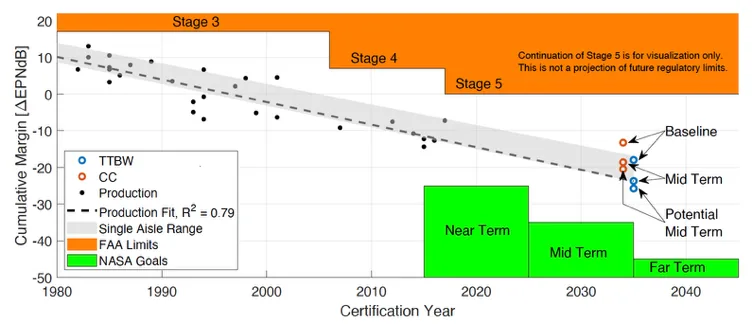
On noise, the baseline configuration clears FAA Stage 4 by about 23 EPNdB cumulative, but its sideline margin under Stage 5 is only 2.9 EPNdB, thin enough to be flagged as a certification risk even if modeling bias may explain part of it.
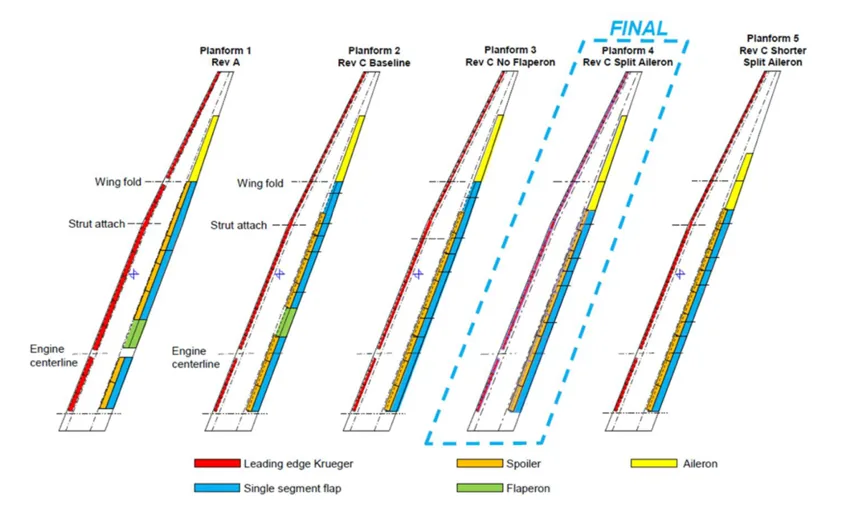
Systems integration. The thin, high-aspect-ratio wing that makes the configuration efficient leaves little room for fuel, so proposals move tanks into the fuselage and struts, at some cost in L/D. Engine placement, the wing-fuselage junction, and control-surface layout get pulled along with it.
05The Q&A
I rehearsed the talk more than a hundred times over three months and prepared answers for every question I could think of. Then a room of engineers who had spent their careers on this configuration asked about details I had never considered, used terms I had never heard, and questioned specifics of studies I had overlooked. I couldn't answer a single question.
After the session I tracked down the people who had asked, including two authors I had cited, and asked them to explain what they meant and how they had approached their studies. I'm still in touch with some of them. Walking up to them afterward was more uncomfortable than the Q&A itself, and it was worth more than all hundred rehearsals.
At the forum I also sat in on technical panels and plenaries, met engineers on the expo floor, and joined the Rising Leaders speed-mentoring session.
The topic I keep coming back to is certification. With something this new, part of the engineering is figuring out how you'd even prove it's safe.