Assistive device
Accessible PlaySeat
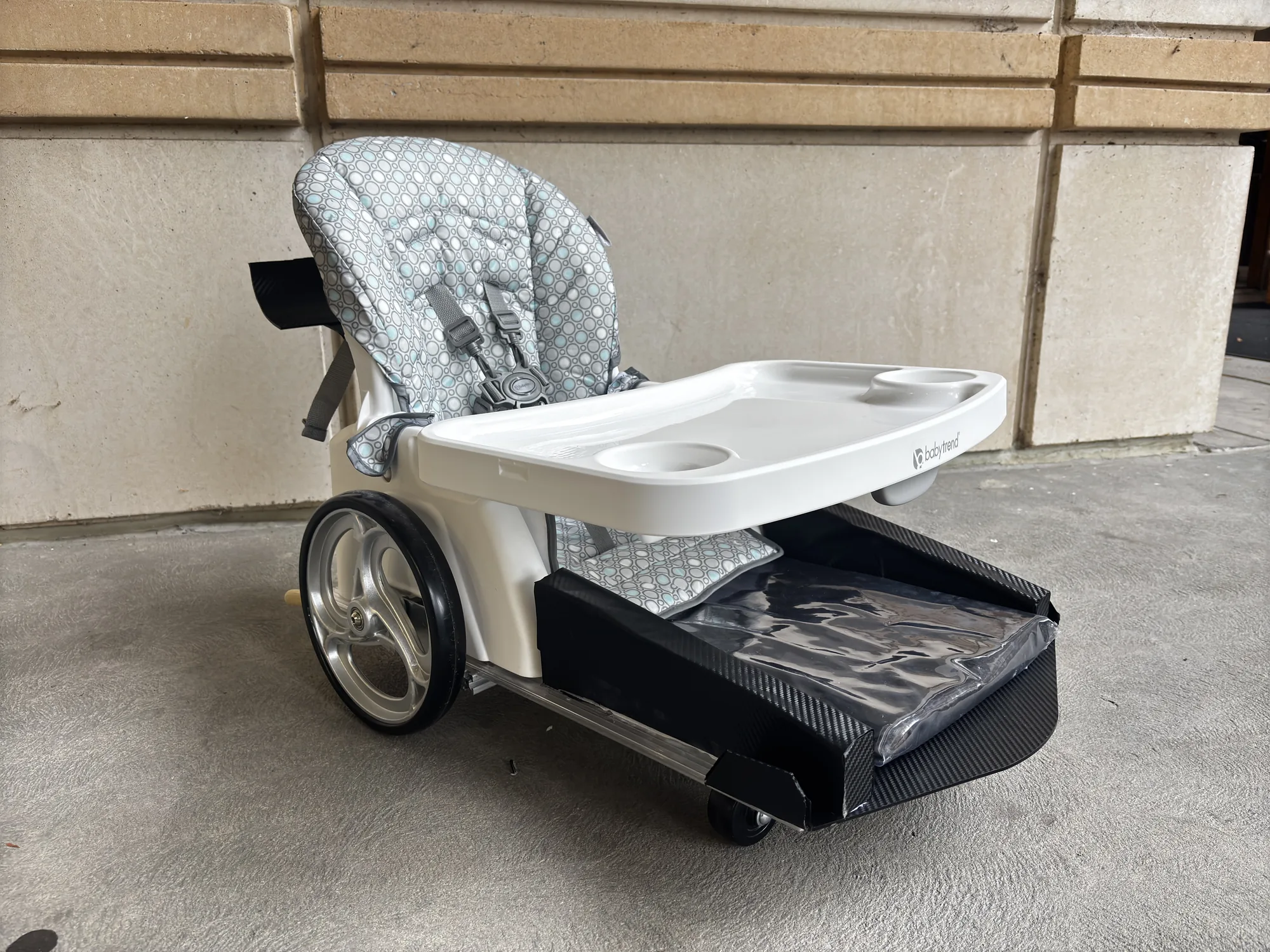
We built a play seat for a three-year-old who loves Formula 1. The first time he sat in it, we learned the wheels were in the wrong place.
- Timeline
- 11 weeks, concept to delivery
- Verification
- Fit test with client and caregivers; six pass/fail tests against target values, one by proxy
- Change from testing
- Drive wheels moved forward, rear casters added
- Weight
- 15.72 lb (target 20 lb or less)
- Materials
- Polycarbonate base, acrylic spoilers with carbon-fiber vinyl, 3D-printed PLA cane mount
- Processes
- Laser cutting, acrylic bending, manual machining
01Who it was for
A three-year-old with spinal conditions needed more upper-body support than any wheelchair on the market gave him, and without it he couldn't play with the other kids in his classroom. We had eleven weeks to find out what he and his caregivers actually needed, turn that into requirements we could measure, build to them, and test every one.
The chair had to let him reach the ground to play with toys on the floor, right himself after leaning, move on his own and get over obstacles, keep up with his peers, and be something he actually enjoyed sitting in.
02What was mine
I designed and fabricated the seating structure, and shared requirements elicitation and verification testing with my teammates Anna Karius, Ethan Liao, and Julia Morgan.
03From sketch to fit test
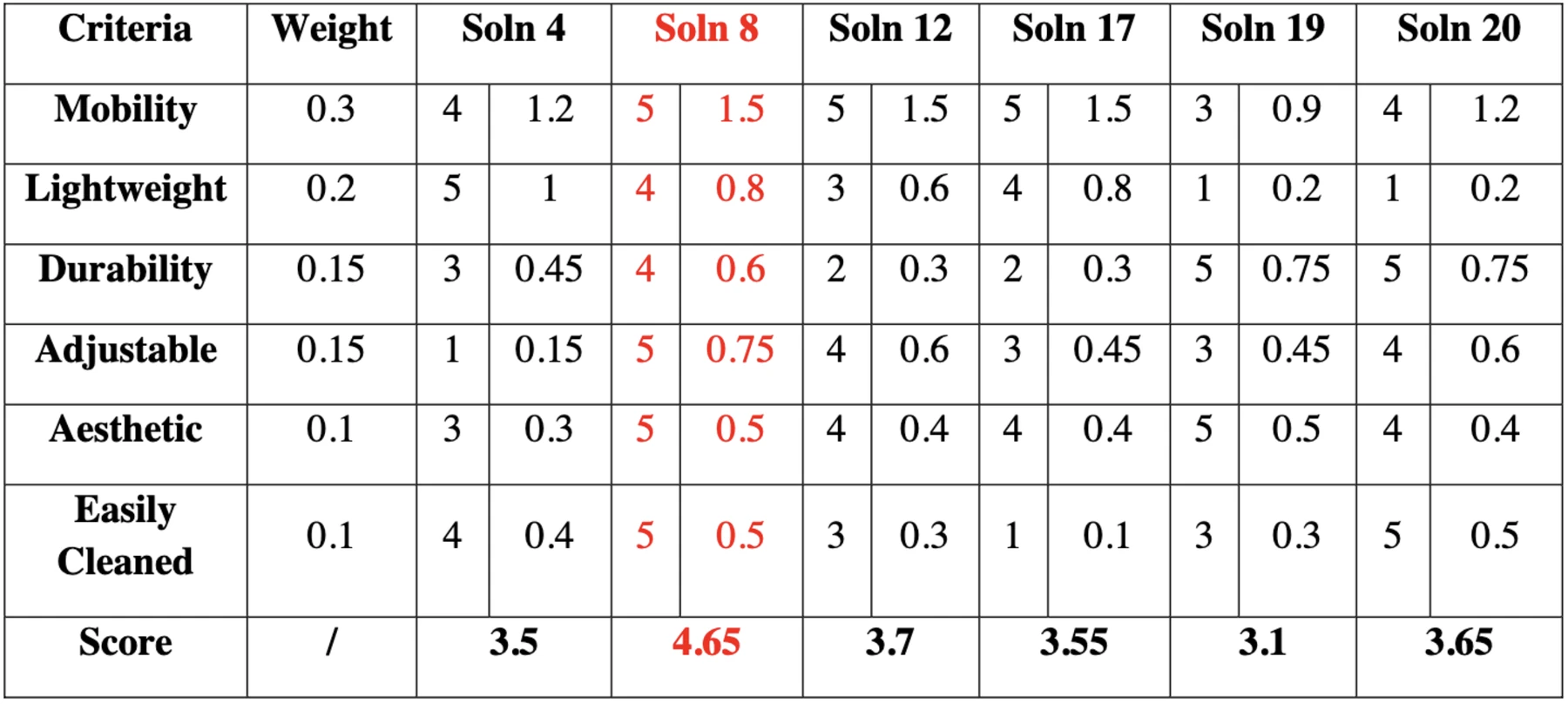
We brainstormed about twenty concepts, cut them down to six, and scored those in a weighted Pugh matrix where mobility counted the most. Solution 8 won with 4.65, against 3.7 for the next best: a race-car seat whose bottom snaps in, with an adjustable headrest, a folding cane, and a lap tray.
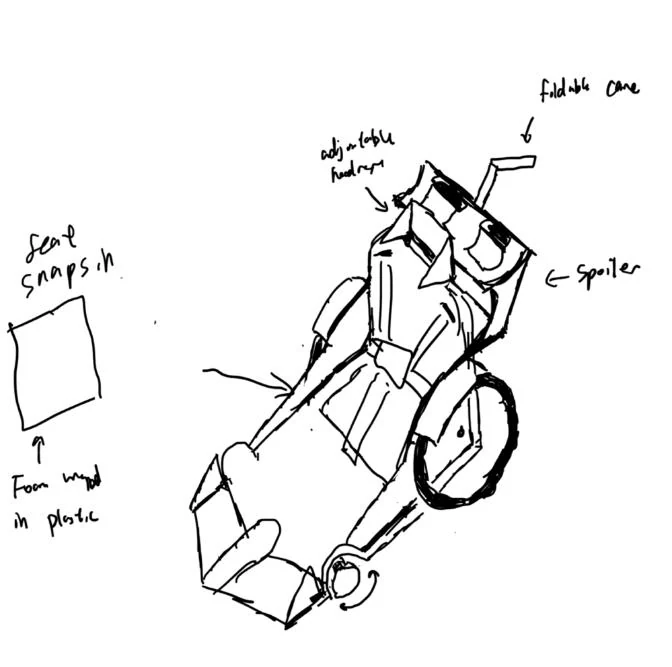
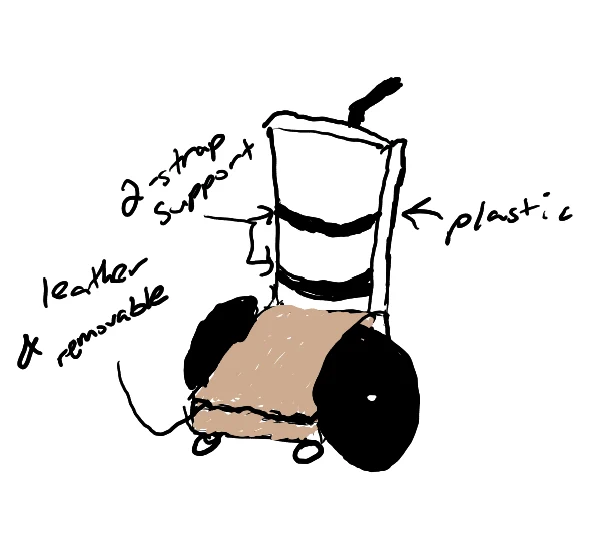
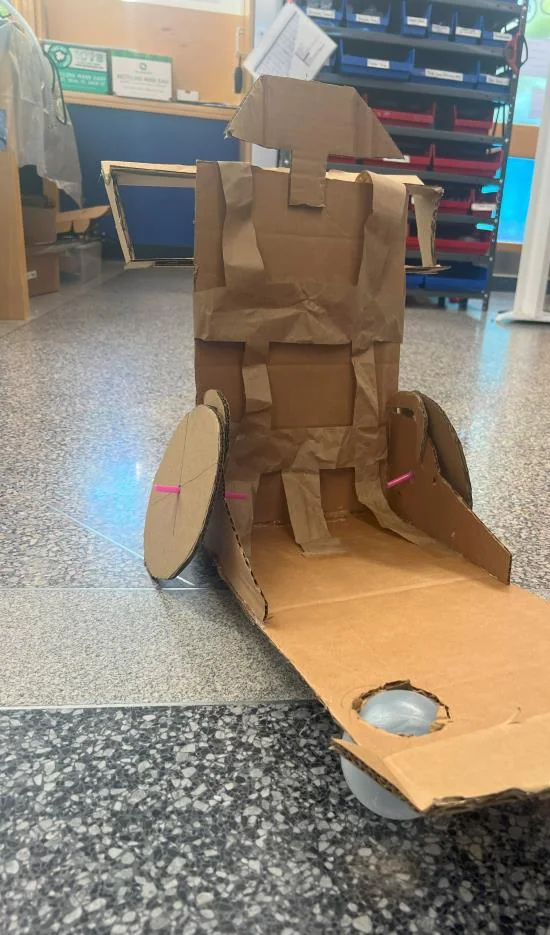
Prototype #1 was cardboard, and #2 was the first real chair. Between them they showed us a weak wheel connection, a spoiler that was too long, wheels that were too small, a seat base that was hard to get out, exposed metal, and missing casters.
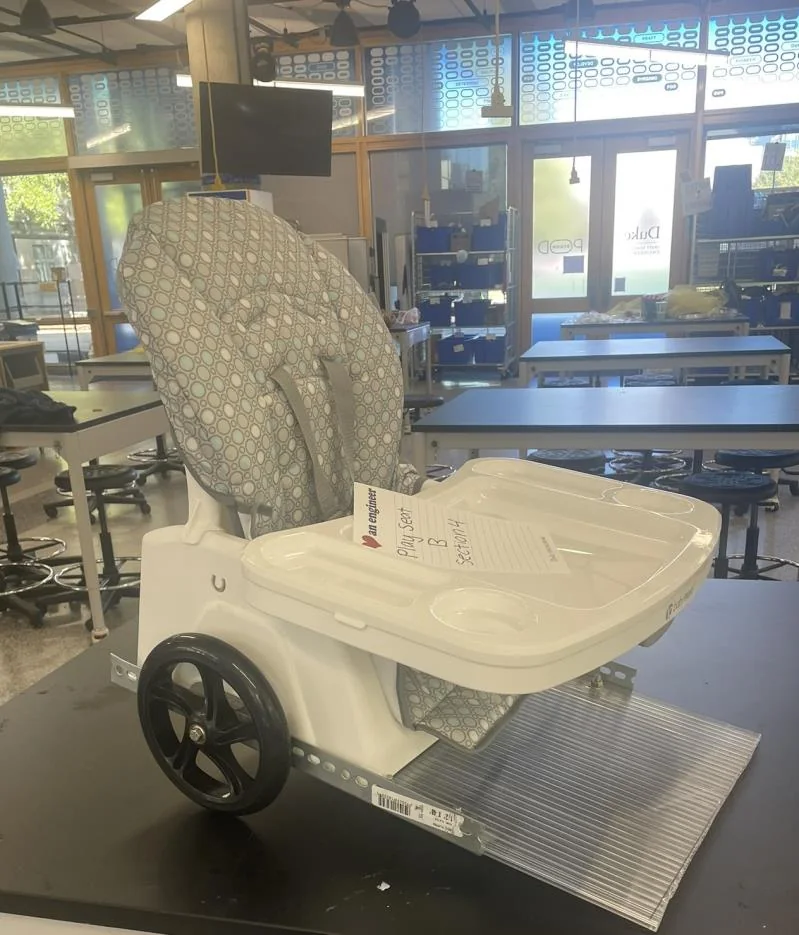
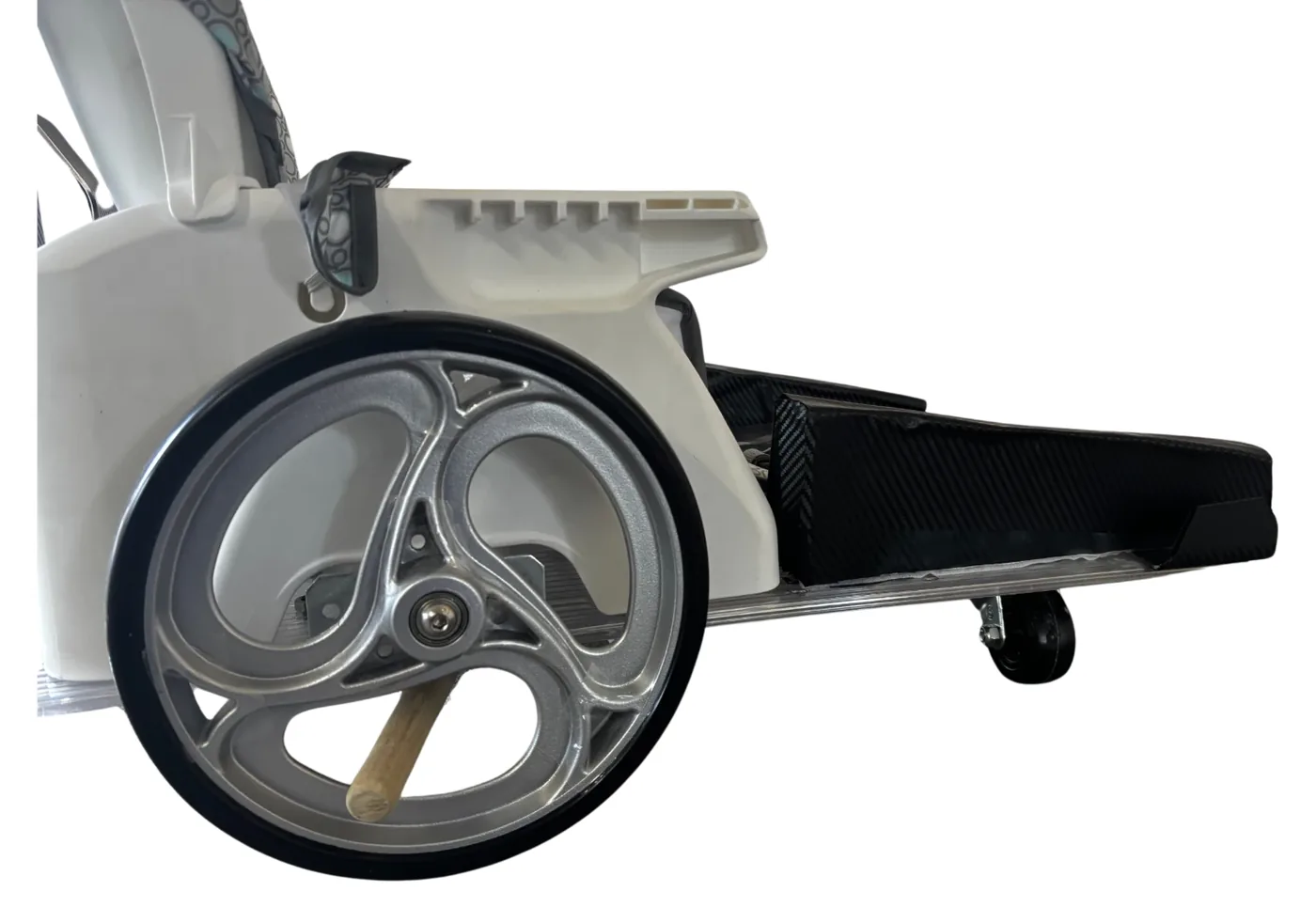
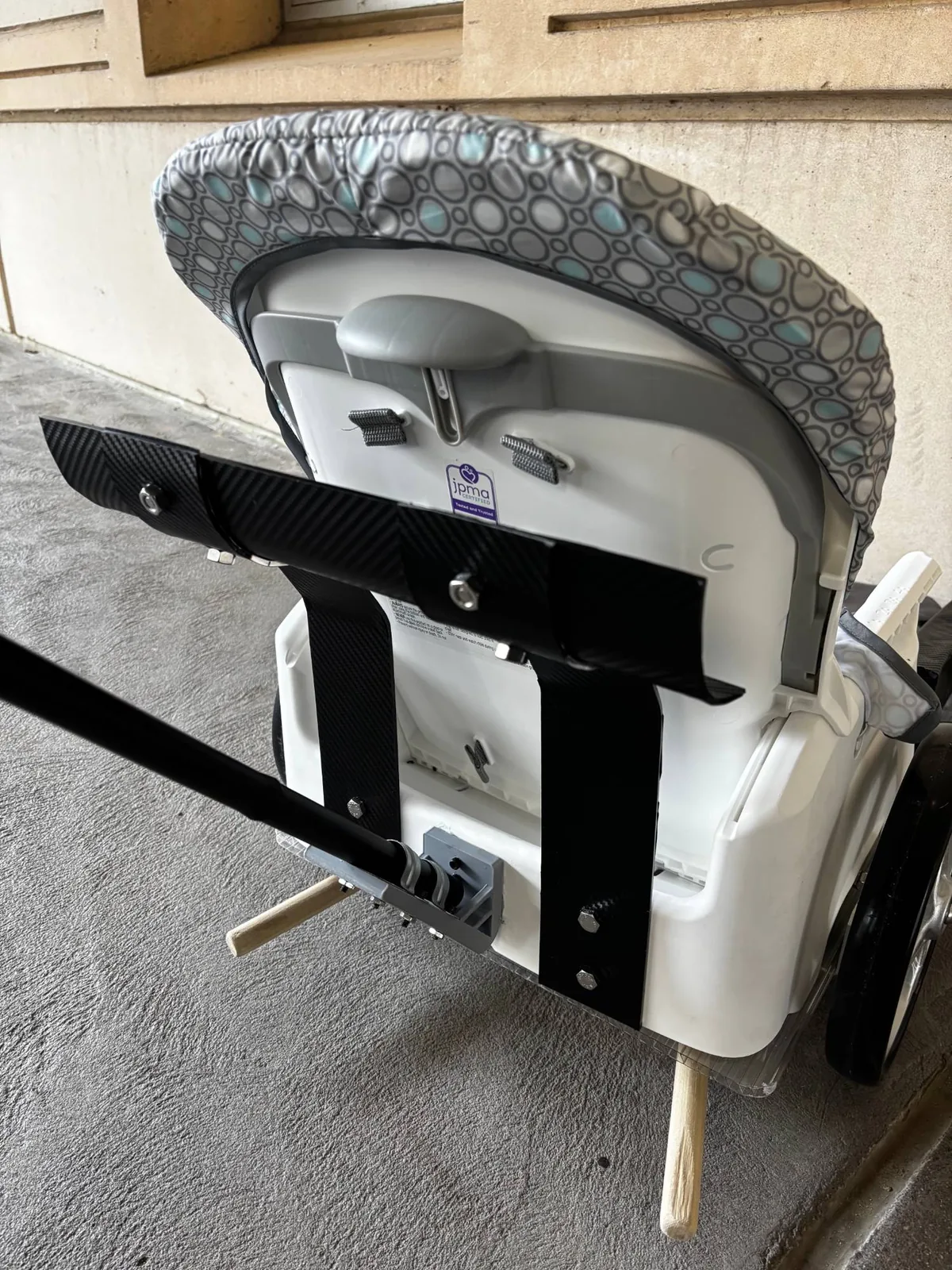
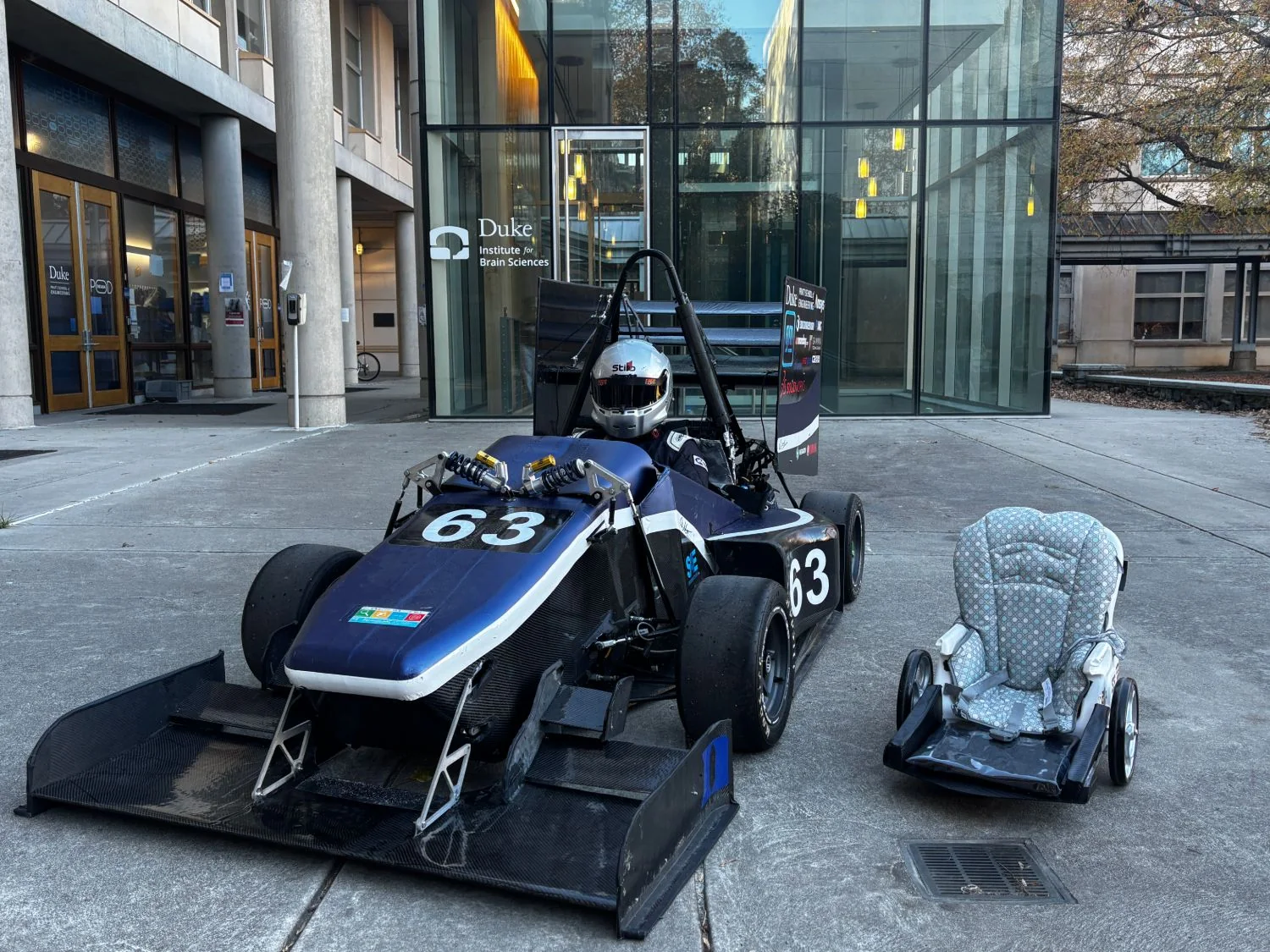
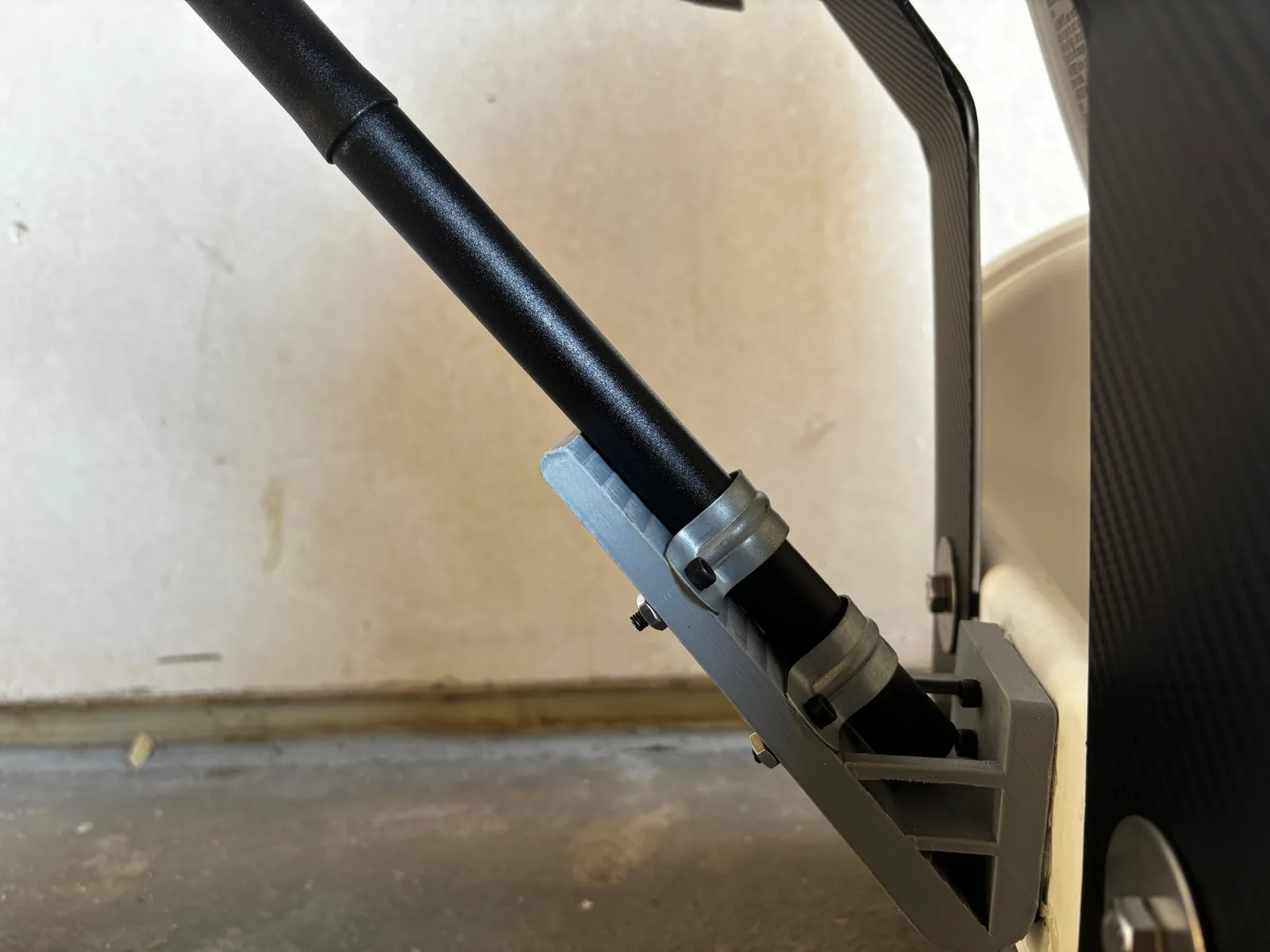
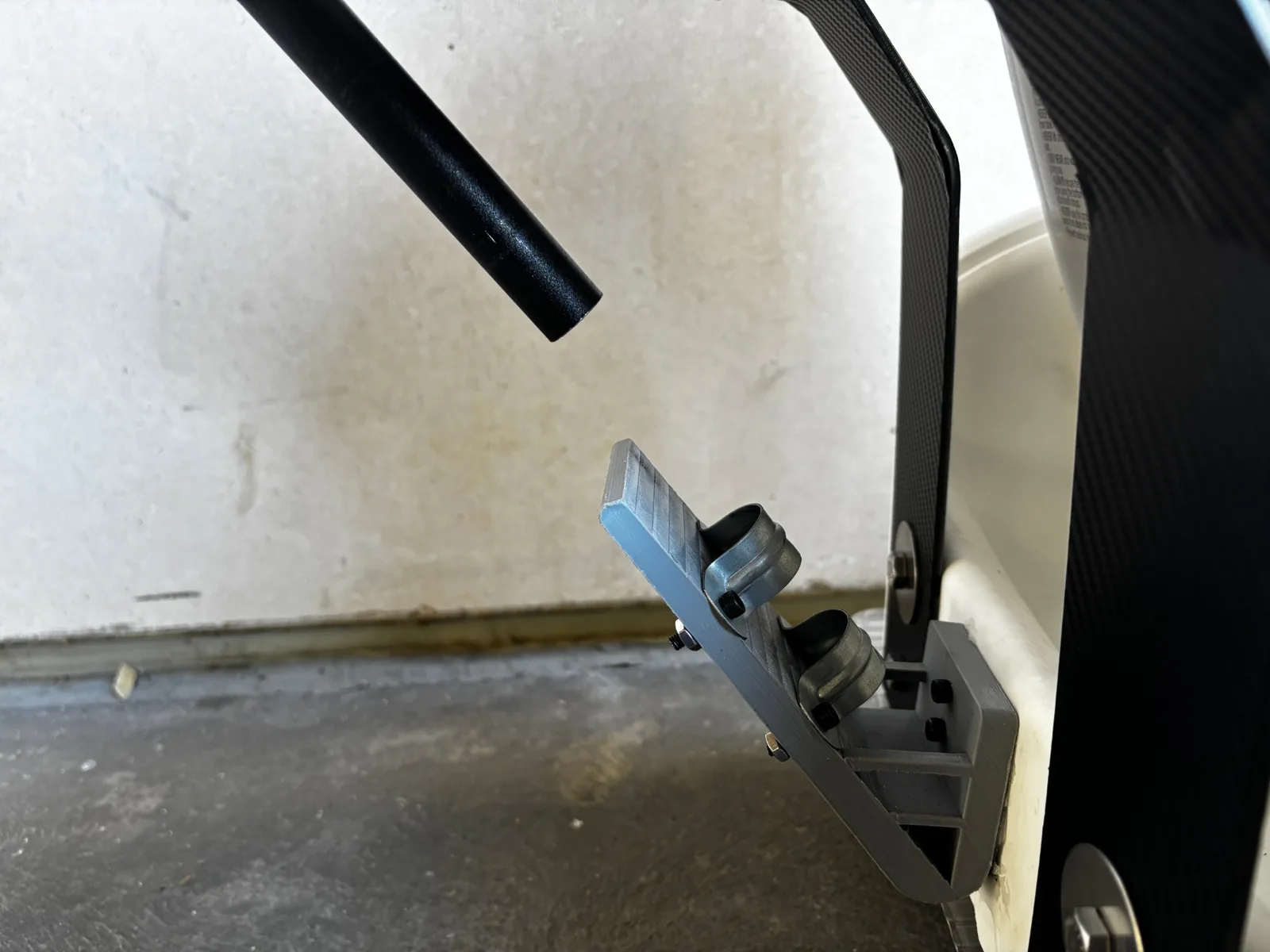
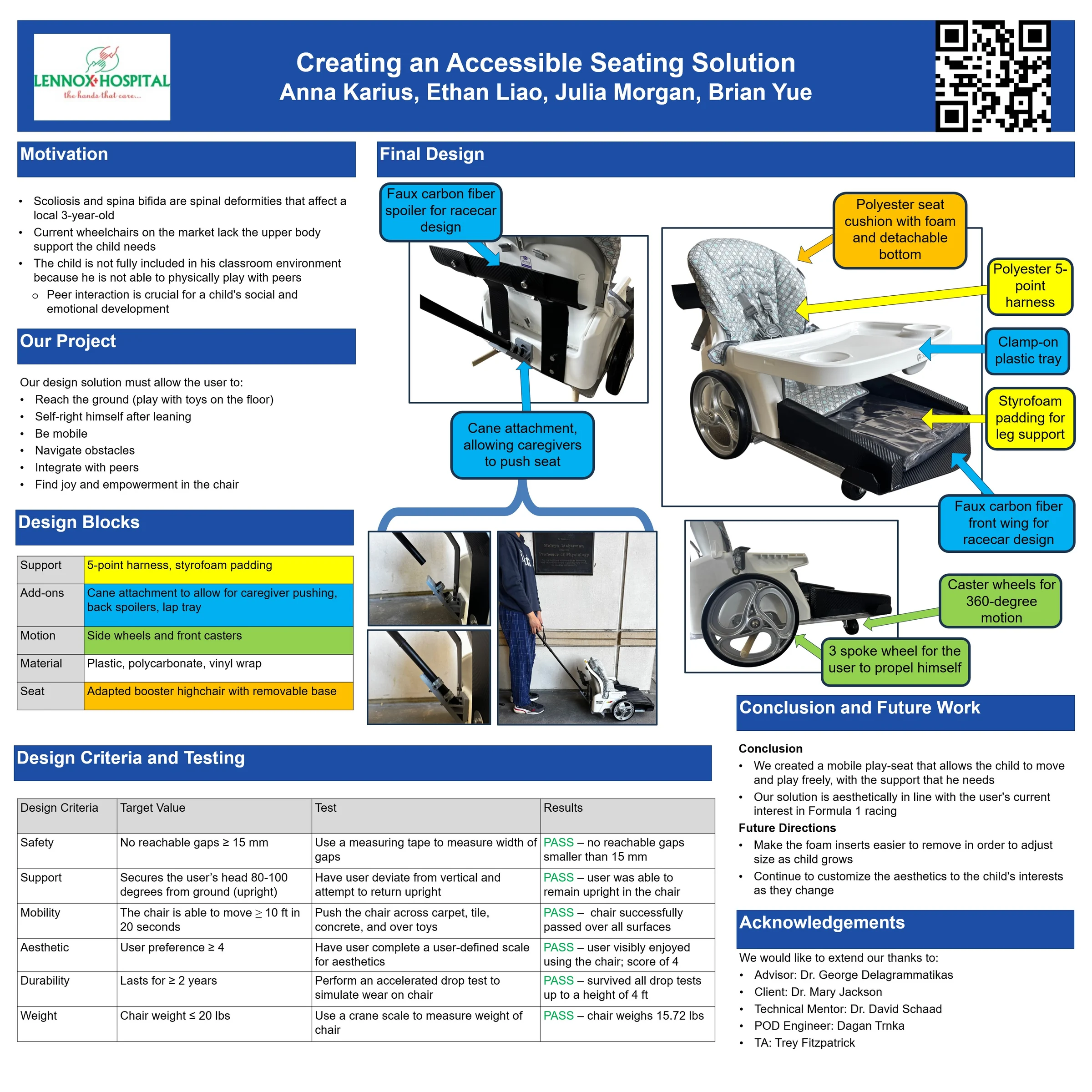
We started from a booster highchair with a removable base and built around it: a five-point harness and foam padding for support, side wheels he can push himself, front casters so it turns in place, a cane attachment so caregivers can push him, and a clamp-on tray. He loves Formula 1, so we also gave it a faux carbon-fiber spoiler and front wing. Not looking like medical equipment became one of our requirements.
A prototype fit test, our first validation against the real user, showed he couldn't reach the push rims. We'd written that requirement down and still gotten it wrong. We moved the drive wheels forward, which fixed the reach but shifted the center of gravity, so we added rear casters to balance it. That's why the final chair has casters front and back.
04Testing every requirement
We verified the finished chair against every requirement with a target value. All six passed: five directly, and durability by proxy, since two years of service can't be tested in eleven weeks. We delivered the chair to the client at the end of the build.
| Criterion | Target | Test | Result |
|---|---|---|---|
| Safety | No reachable gaps of 0.6 in (15 mm) or more | Measured every gap he could reach | Pass None 0.6 in or larger |
| Support | Holds his head 80–100° from the ground | He leaned away from vertical and tried to return upright | Pass Stayed upright |
| Mobility | 10 ft or more in 20 s | Pushed across carpet, tile, concrete, and over toys | Pass All surfaces |
| Aesthetics | A rating of 4 or more from him | He rated it on a scale he set himself | Pass 4, and visibly enjoyed it |
| Durability | 2 or more years of service | Verified by proxy: drop tests up to 4 ft, the most severe case we could run in 11 weeks | Proxy Survived every drop. Service life itself was not tested. |
| Weight | 20 lb or less | Crane scale | Pass 15.72 lb |
05Looking back
It's the smallest project here, but it taught me the most about requirements. Until we put him in the chair, ours were really just educated guesses. It also taught me to be upfront about what a test shows: a drop test can stand in for two years of use, but it doesn't prove it, so the table says "proxy" instead of "pass."
The next change would be foam inserts that come out more easily, so the seat can be resized as he grows.